From Siloed Systems to a Single Source of Truth: Unified Ecommerce Data Hub & Business Intelligence
How Project 19 connected ShopSite, Shipworks, and SKUVault into a centralized data platform, powering Tableau dashboards and Avalara tax compliance at scale.
Executive Summary
A growing ecommerce business powered its storefront with ShopSite, processed and shipped every order through Shipworks, and managed inventory through a cloud based warehouse management system called SKUVault. On paper, the stack covered the full order lifecycle. In practice, all three platforms ran in isolation. Client records, order history, inventory levels, and shipping data lived in separate silos with only loose coupling between ShopSite and SKUVault. Leadership lacked a unified view of operations, and teams spent hours reconciling spreadsheets to understand what was actually happening across the business.
Project 19 stepped in to design and build a centralized data hub that aggregates clients, orders, inventory, and shipping information into one reliable foundation. The new architecture did more than consolidate data. It unlocked a wave of downstream systems, executive dashboards, and near real time reporting that gave leadership visibility into the KPIs driving fulfillment, shipping, and overall productivity.
Technology Insight: Why a Centralized Data Hub?
Modern ecommerce operations rarely fail because of a single broken tool. They fail because critical systems never talk to each other. A data hub acts as the connective tissue between storefront, fulfillment, and inventory platforms, normalizing disparate data formats into a single warehouse that downstream applications can trust.
Once that foundation exists, business intelligence, compliance reporting, and operational monitoring become practical instead of aspirational. Project 19 treated the data hub not as a one time integration project, but as the permanent backbone for every analytics, reporting, and automation initiative the organization would build next.
The Challenge: Disconnected Platforms and Blind Spots
Without a unified data layer, the client's teams were flying blind. Executives could not answer basic questions about order throughput, warehouse efficiency, or inventory health without manual effort. Project 19 identified four core barriers standing in the way of operational clarity:
-
1
Three Systems, Zero Integration
ShopSite handled online sales, Shipworks managed order processing and shipping, and SKUVault tracked inventory, but none shared a consistent, synchronized dataset. Information had to be pulled manually from each platform, wasting valuable time and resources.
-
2
No Executive Visibility
Leadership had no near real time view of business performance. KPIs around order fulfillment, picking accuracy, and shipping throughput were buried in disconnected reports that were always days behind.
-
3
Manual Tax Compliance Overhead
The client's unique business model required collecting taxes from customers and filing on monthly and quarterly schedules. Without automated pipelines, tax data had to be extracted and reconciled by hand, a process prone to delays and errors.
-
4
Undetected Process Inefficiencies
Productivity gaps in fulfillment and shipping went unnoticed because there was no monitoring layer to surface bottlenecks. Teams repeated flawed workflows without the data to prove where time and margin were being lost.
The Solution: Data Hub, BI Dashboards, and Compliance Pipelines
Project 19 delivered a three phase implementation that transformed fragmented operational data into a cohesive intelligence platform.
Phase 1: Centralized Data Hub Architecture
We designed an enterprise data hub that normalizes data from ShopSite, Shipworks, and SKUVault. Client profiles, order transactions, inventory positions, and shipping events are consolidated into a single source of truth, creating the foundation for every downstream system the organization needed.
Phase 2: Tableau Business Intelligence & Executive Dashboards
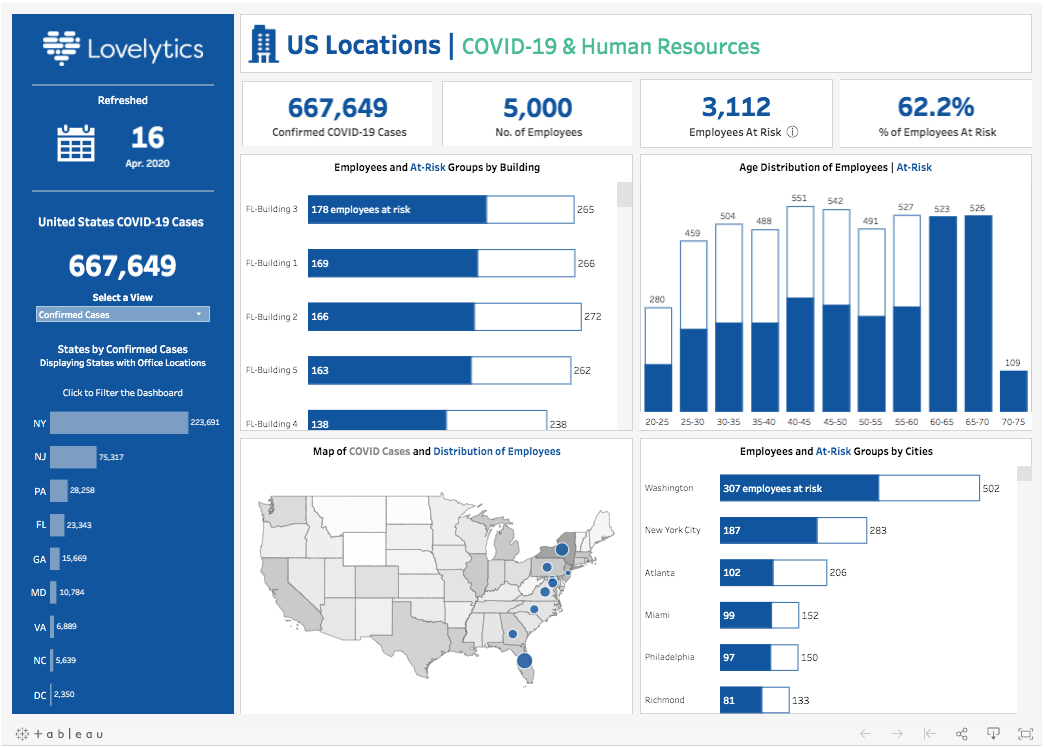
With the data hub in place, Project 19 built multiple Tableau dashboards giving management and executives a holistic, near realtime view of the state of their operations and business.
Sales & Order Performance
Dashboards covering sales trends, order details, and fulfillment status, allowing leadership to track team performance at any given moment.
Warehouse & Shipping Operations
Reports on picking, packing, and shipping throughput help operations managers monitor efficiency and catch delays before they compound.
Inventory & Demand Forecasting
Full visibility into the inventory system enables product demand forecasting and supply chain monitoring, reducing stockouts and overstock situations.
Phase 3: Avalara Tax Compliance Integration
Project 19 built data pipelines to extract tax relevant transaction data from the warehouse, integrate it with Avalara AvaTax, and run scheduled ETL jobs that feed compliance dashboards. AvaTax applies accurate, jurisdiction aware tax calculations in real time across both sales and purchasing workflows covering product type, exemption rules, and regional requirements while automated reporting replaced manual monthly and quarterly filing preparation.
Business Impact & Measurable Outcomes
The unified data platform immediately changed how the organization operated, from the warehouse floor to the executive suite.
- 2x Increase in Order Fulfillment & Shipping: KPI visibility exposed process flaws that had gone undetected for years. Once identified, new monitoring systems were introduced and workflows were optimized,doubling fulfillment and shipping throughput.
- Near Real Time Executive Reporting: Leadership gained a continuous view of business performance instead of waiting on stale, manually compiled reports. Decision making shifted from reactive to data driven.
- Streamlined Tax Compliance: Avalara integration and automated ETL pipelines eliminated manual tax data extraction, giving finance teams accurate dashboards for monthly and quarterly filing with far less operational overhead.
The Takeaway
When ecommerce platforms run in isolation, the cost is not just inefficiency, it is invisible inefficiency. By building a centralized data hub and layering Tableau intelligence and Avalara compliance on top, Project 19 gave this organization the visibility to find problems, fix them, and scale with confidence. The data hub has become the permanent foundation for every operational and strategic initiative that follows.