Connecting the Skies: Consolidated Digital Workplace Portal for a Major US Airline
How Project 19 executed a multi-phased enterprise migration, combining a SharePoint core upgrade with Workvivo to unify distributed deskless and corporate workers.
Executive Summary
An enterprise-scale commercial airline in the United States, operating a sprawling network of corporate staff and deskless on-field personnel—including pilots, flight attendants, and ground crew—faced a severe internal communications crisis. The company’s workforce infrastructure was segregated across multiple disjointed digital systems, operating on a heavily outdated intranet that failed to connect isolated operational teams. The airline required a centralized, unified portal to act as a single entry point for all organizational content, tools, and social engagement.
Project 19 was selected to design and execute a comprehensive, multi-phased infrastructure overhaul. Our team successfully modernized the airline’s legacy technical core and unified employee communications. By structuring the project into two distinct strategic stages—upgrading their core data layers to SharePoint 2016 and deploying Workvivo as an interactive employee engagement layer—Project 19 built a highly integrated, mobile-first digital workplace that bridges the gap between the corporate office and the flight line.
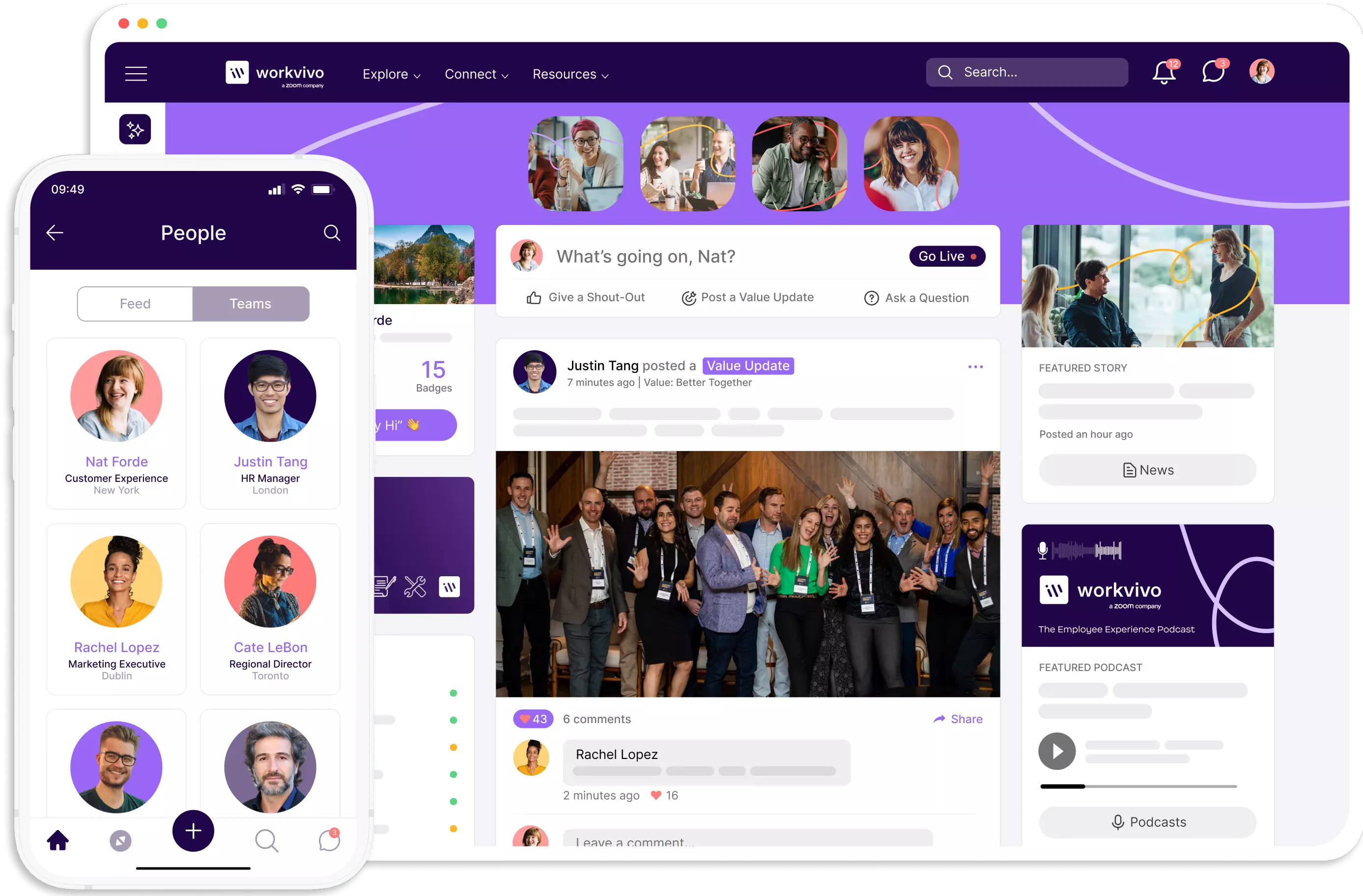
Technology Insight: What is Workvivo?
Workvivo is an employee engagement and digital workplace platform designed to centralize internal communications, corporate culture, and team collaboration within a modern, social-media-style interface.
Engineered explicitly to boost organizational alignment, it provides a vibrant activity feed, native mobile accessibility, and tools for top-management strategy streaming. Project 19 utilized Workvivo as the highly interactive front-end experience for the airline, sitting directly on top of secure enterprise document structures to maximize day-to-day employee adoption.
The Challenge: A Fragmented, Isolated Workplace Network
A major airline relies on split-second execution and strict operational compliance, making instant communication vital. However, the client’s existing intranet infrastructure was crippled by legacy technical debt and operational silos, presenting nine critical challenges:
Outdated Platform Infrastructure: The central infrastructure was built on an obsolete, slow version of SharePoint (2013) that could no longer sustain enterprise-grade integrations.
Severe System Segregation: Internal data, employee resources, and toolsets were scattered across completely different, unlinked platforms with no unified entry point.
Inaccessible Field Workforce: The system lacked a mobile-first strategy, completely locking out critical on-field, deskless employees such as pilots, flight crew, and terminal ground staff who rely entirely on mobile devices.
Inefficient Content Management (CMS): The legacy CMS was highly technical and difficult to use. Posting basic updates required a bottlenecked, dedicated technical team to manually publish content.
Broken Search Capabilities: Enterprise indexing algorithms routinely failed, returning old, outdated, or broken search results to employees looking for vital operational manuals.
Waning Employee Engagement: Due to static layouts and poor delivery, personnel showed total disinterest in corporate news, announcements, and cultural updates.
Missing Social & Peer Collaboration: The digital environment lacked any interactive, peer-to-peer social mechanisms, leaving employees feeling isolated from their broader teams.
Siloed Executive Communication: Top management had no direct, frictionless channel to stream corporate strategy, leaving frontline staff disconnected from overarching corporate goals.
Absence of Ecosystem Integration: Seamless, real-time integration with peripheral operational systems was nonexistent, requiring workers to log into several separate applications to finish simple tasks.
The Solution: A Two-Stage Enterprise Overhaul
Project 19 designed a strategic roadmap to replace the fragmented intranet with an enterprise digital workplace. The solution was deployed in two heavily managed engineering phases:
Stage 1: Core Technical Modernization (SharePoint 2013 to 2016 Upgrade)
The first phase focused entirely on upgrading the client’s core data storage, document trees, and integration capabilities. Project 19 seamlessly migrated the airline’s vast database from SharePoint 2013 to SharePoint 2016. This structural upgrade repaired broken enterprise search indexing, introduced reliable data structures, and established the scalable API framework necessary to safely feed data into external communication layers.
Stage 2: Digital Workplace Consolidation & Engagement Layer Deployment (Workvivo)
With a clean database foundation established, Project 19 introduced Workvivo as the unified digital workspace engine. We integrated the platforms to feed SharePoint document repositories directly into Workvivo’s front-end environment, delivering a unified system experience:
Consolidated Single Entry Point: We consolidated the scattered platforms into a single, comprehensive portal, creating a unified entry point where corporate and frontline staff access tools, news, and compliance documents simultaneously.
Mobile-First Native Accessibility: Project 19 optimized the Workvivo deployment for mobile app ecosystems, enabling pilots in the cockpit and ground crews on the tarmac to securely access company tools, shift updates, and manuals over cellular data networks.
Decentralized, Simplified CMS: The user-friendly interface allowed authorized non-technical staff and department heads to draft and publish localized updates instantly, completely eliminating the need for a dedicated technical support team to post articles.
Executive Streams and Social Connectivity: We introduced social functionality, including peer recognition badges, community spaces, and an interactive feed. This feature allowed top executives to broadcast corporate strategies directly to frontline staff via interactive video posts and live streams, driving company-wide alignment.
Business Impact & Operational Outcomes
The deployment of the consolidated intranet infrastructure transformed the airline’s organizational culture and operational agility, delivering clear measurable value:
Unprecedented Field Employee Adoption: Transitioning to a mobile-first strategy allowed thousands of on-field employees (pilots, crew, and ground staff) to access the digital workspace on the move, closing the deskless worker gap.
Surge in Employee Engagement and Alignment: Replacing dry, static updates with an interactive social layer drove employee interest in company strategy, significantly increasing daily active user engagement.
Elimination of Operational Content Bottlenecks: Upgrading the search indexing structure completely cleared out outdated results, ensuring safety, compliance, and corporate documentation are immediately searchable and accurate.
Optimized Administrative Efficiency: Empowering non-technical teams to manage content directly through the simplified CMS freed up technical IT personnel, cutting down operational management costs.
The Takeaway
By pairing a heavy-duty backend migration (SharePoint 2016) with an agile, human-centric engagement layer (Workvivo), Project 19 turned a fragmented, legacy infrastructure into a unified digital home. The project successfully aligned tens of thousands of distributed aviation employees under a single entry point, proving that deep technical experience combined with user-centric design can bridge even the widest enterprise communication gaps.