Orchestrating Complex Logistics: Custom Rules-Engine for Automated Seasonal E-Commerce Fulfillment
How Project 19 overcame legacy infrastructure barriers and zero-sandbox limitations to engineer an enterprise-grade automated order processing bridge.
Executive Summary
An established e-commerce retailer running high-volume digital storefronts faced a critical logistical roadblock: their business model relied on selling complex, highly seasonal products. These items required strict, zone-specific delivery schedules alongside standard goods that demanded immediate dispatch based on locality and climate conditions. While the client utilized an industry-standard third-party shipping and inventory software platform, that core software lacked the capability to process highly dynamic, context-aware scheduling logic.
Project 19 was contracted to bridge this software gap. We engineered a highly tailored, intelligent order-processing middleware solution. Despite dealing with severe architectural limitations—including legacy on-premise components hidden behind secure network firewalls, systems completely devoid of API support, and the absolute absence of a staging/sandbox environment—Project 19 delivered a seamless automated system. The solution now operates as the central backend backbone powering all of the client’s online storefronts.
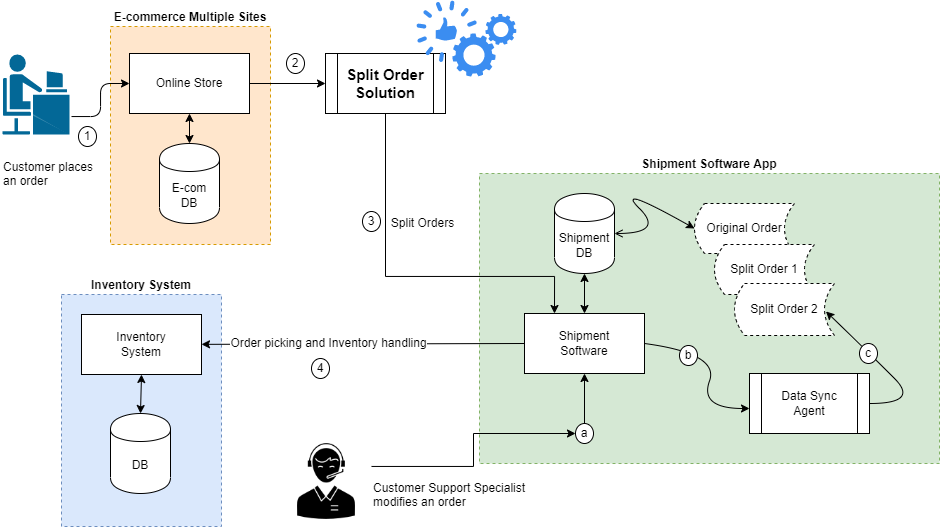
The Challenge: Inconsistent Integration and Infrastructure Barriers
To implement precise, zone-and-season-based fulfillment rules, the new solution had to sit directly between the consumer-facing e-commerce store and the third-party inventory fulfillment platform. However, the existing infrastructure presented severe technical complications that standard out-of-the-box connectors could not address:
Inconsistent Integration Capabilities: The client’s existing third-party logistics platforms lacked uniform connectivity. Some sub-systems provided highly limited API support, while other essential platforms lacked API access altogether.
Legacy On-Premise Environments: To retrieve inventory data and write shipping rules, Project 19 had to bypass the lack of APIs by establishing direct database connections. These databases were located on-premise behind strict enterprise network firewalls, requiring customized security access protocols to dial in from the outside securely.
Zero Testing Infrastructure (The Sandbox Challenge): The most pressing risk was the complete nonexistence of a development or sandbox environment. Mirroring the environment meant meticulously recreating multiple distinct vendor database setups, auditing and modifying production database triggers, and testing the software thoroughly while ensuring the client’s active production site remained completely untouched and operational.
The Solution: Bespoke Architectural Middleware & Controlled Deployment
Project 19 assembled a dedicated engineering team to build a bespoke order-processing bridge. Utilizing best-in-class software development frameworks and a rigorous continuous integration workflow, the team tackled the problem through an advanced architecture plan:
Bespoke Logic Rules Engine: We designed a custom processing layer that automatically screens incoming e-commerce receipts. The system evaluates the item type (seasonal vs. immediate standard shipping), calculates the customer’s geographical delivery zone, and dynamically assigns a strict release and shipping schedule to the warehouse software.
Hybrid Data-Access Layer: For systems with limited APIs, our team built tailored connection wrappers. For non-API systems, we developed secure database connectors that safely pierced the on-premise firewall using industry-leading security parameters, enabling safe direct-to-DB reading and writing.
Recreated Staging Environment: To guarantee absolute safety before launch, Project 19 carefully reverse-engineered a local testing sandbox. We replicated the vendor database schemas, systematically isolated and modified complex database triggers, and ran comprehensive automated checks without exposing live consumer transactions to any operational risk.
Business Impact & Tangible Outcomes
Upon deployment, Project 19’s custom solution immediately stabilized the client’s complex supply chain, transforming an error-prone manual bottleneck into a reliable, automated engine. The project successfully achieved the following milestones:
100% Automation of Seasonal Logic: All manual parsing, sorting, and holding of seasonal orders were fully automated. This completely eliminated human data-entry errors and dramatically boosted backend staff productivity.
Optimized Order Handling: Orders are now cleanly routed, grouped, and released to fulfillment centers based on zone schedules automatically, maximizing warehouse efficiency.
Elevated Customer Satisfaction: Eliminating fulfillment delays and seasonal delivery mix-ups drastically lowered customer complaints, leading to stronger brand loyalty and a frictionless post-purchase experience.
The Takeaway
Even when constrained by restrictive legacy databases, missing APIs, and a complete lack of testing sandboxes, Project 19’s rigorous engineering practices successfully brought automation to a complex retail ecosystem. The custom engine has transformed from a software patch into the permanent digital backbone of our client’s multi-store e-commerce business.